


When you think "jump rope," you probably picture the flimsy speed rope from the school playground. It's time to forget that. The heavy jump rope is a completely different beast—a serious piece of fitness gear that combines the raw, power-building intensity of battle ropes with the quick-fire cardio of traditional jumping.
This isn't just another cardio tool. It’s a full-body workout where cardio meets strength training in every single rotation. Imagine building muscle, torching fat, and fortifying your heart, all with one piece of equipment.
Beyond Cardio: Rethinking the Jump Rope
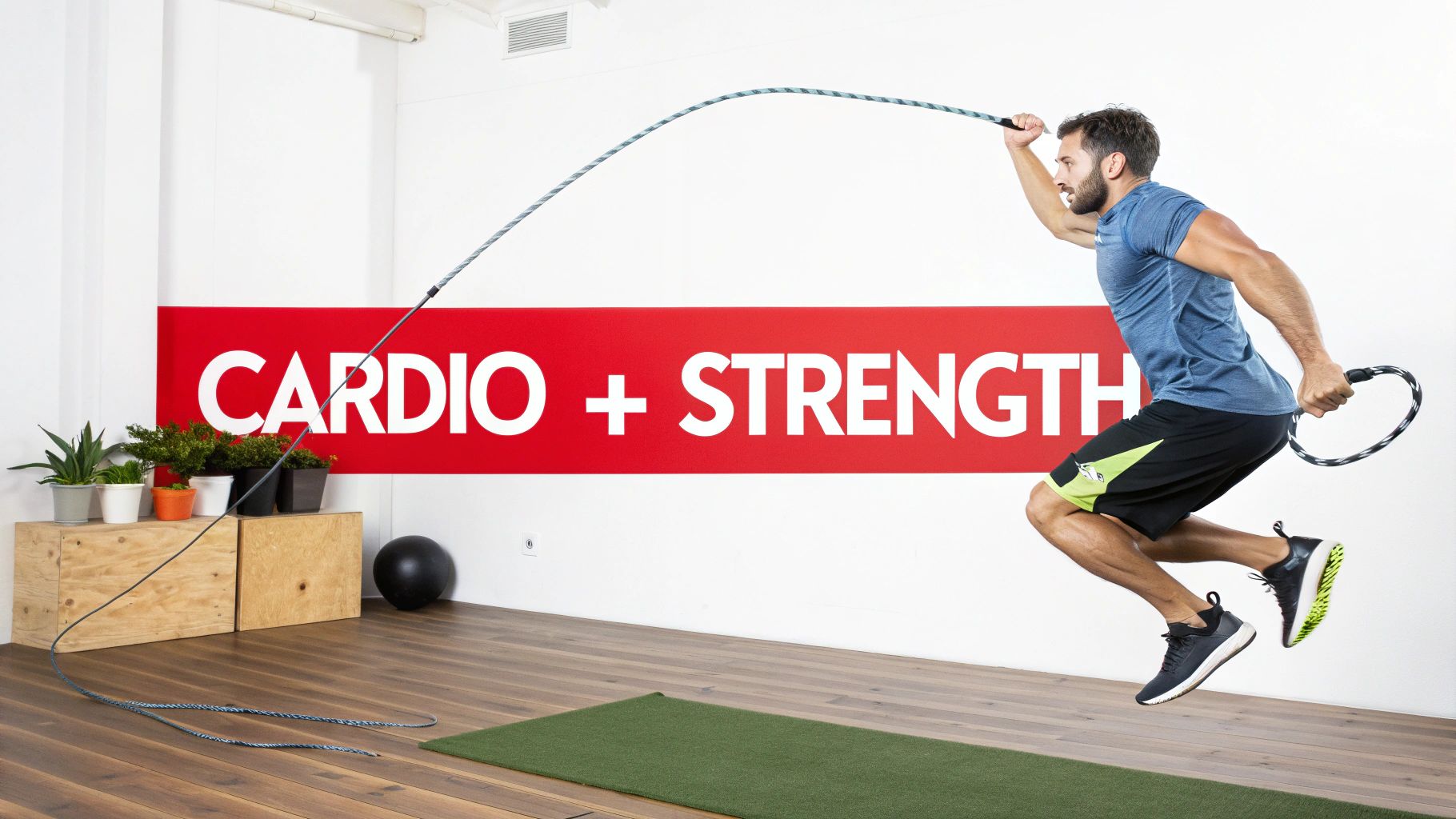
Jumping rope has always been synonymous with fast feet and lung-busting cardio. And for a standard, lightweight speed rope, that’s absolutely true. But when you add significant weight to the rope itself, you fundamentally change the entire exercise.
A heavy jump rope transforms a simple cardio drill into a powerful form of dynamic resistance training. Think about it: every time you swing that heavier cable, you’re forcing dozens of muscles to fire in unison just to control its momentum. Your forearms, shoulders, back, and core have to work overtime to keep the rhythm going.
This creates a unique training effect that builds real-world functional strength and muscular endurance in a way a light rope just can't. Suddenly, it’s not just about how fast you can hop; it’s about how much power your entire body can produce and sustain, over and over again.
What Makes Heavy Ropes Different?
The magic of heavy jump rope training boils down to one word: efficiency. You're pushing your cardiovascular system to its limits while simultaneously building upper-body and core strength. You’re basically stacking two distinct workouts into one fluid, high-energy session, which means you get better results in less time.
Here's a quick look at why this is such a game-changer for your training.
Heavy Jump Rope Benefits at a Glance
This table provides a quick summary of the key advantages of incorporating a heavy jump rope into your fitness routine, showing how it delivers a comprehensive, full-body workout.
| Benefit Category | Primary Impact | Perfect For |
|---|---|---|
| Cardio & Endurance | Drastically improves cardiovascular health and stamina. | Anyone looking to boost heart health and go longer without gassing out. |
| Strength Building | Develops muscle in the forearms, shoulders, back, and core. | Athletes and individuals wanting to build functional, full-body strength. |
| Coordination & Rhythm | Enhanced feedback from the rope's weight makes timing easier. | Beginners learning to jump or anyone looking to improve motor skills. |
| Calorie Burn | Engages more muscle, leading to a higher rate of calorie expenditure. | Individuals focused on fat loss and building a leaner physique. |
This multi-faceted approach ensures you're not just getting fitter in one area; you're building a more capable, resilient, and well-rounded body.
A heavy rope provides constant physical feedback, slowing the rotation just enough for you to feel where the rope is at all times. This feedback is what makes it easier to learn proper form and more effective for conditioning.
Premium MONFIT heavy ropes are designed specifically to give you that perfect feedback, helping everyone from total beginners to seasoned athletes achieve next-level results. By adding this one tool to your arsenal, you're investing in one of the most effective pieces of home workout equipment essentials for building a truly powerful physique from anywhere.
Build Real Strength with Every Rotation
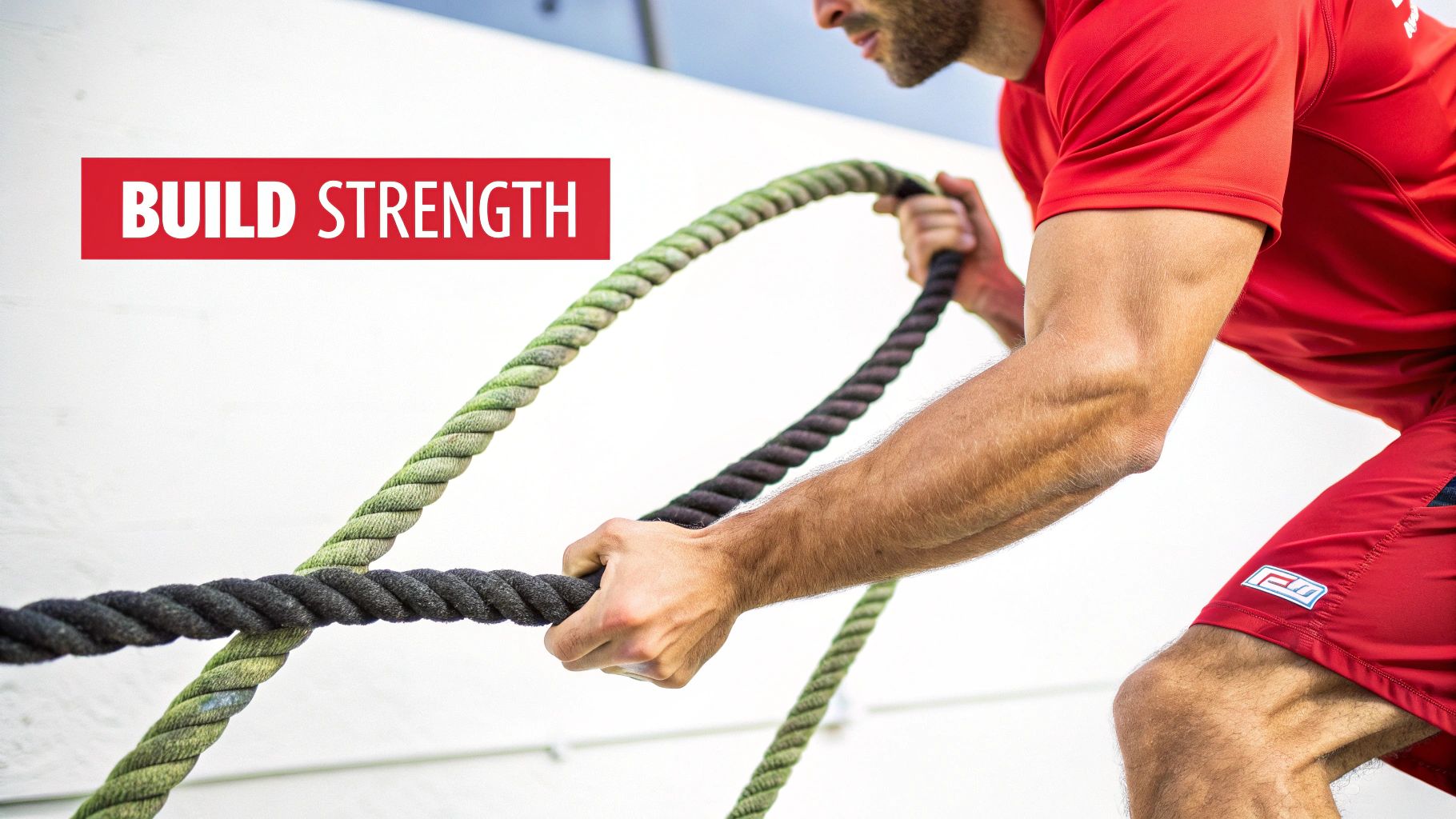
While your standard jump rope is all about speed, a heavy rope is built for power. This is where a simple cardio drill transforms into a serious strength-building workout, lighting up muscles you didn't even know you had. The magic is in something called dynamic resistance, which turns every single rotation into a full-body challenge.
Think about the difference between spinning a thin string versus a heavy chain. The chain's weight creates constant tension, forcing you to work harder just to keep it moving. A heavy jump rope works the exact same way. That continuous, fluid resistance forces muscles to fire from your hands all the way down to your core.
Suddenly, each jump becomes an explosive, rhythmic lift. You're not just flicking your wrists anymore; you're actively engaging a whole network of muscles to control the rope.
More Than Just Legs: A Full-Body Powerhouse
With a light rope, the work is almost entirely focused on your lower body and cardiovascular system. But one of the biggest wins of heavy rope training is its ability to build formidable upper-body and core strength at the same time.
Each swing becomes a battle against momentum, and you’ll feel it everywhere:
- Shoulders and Back: Your deltoids, traps, and lats have to work overtime to control the rope's arc. This is fantastic for building strength and stability.
- Forearms and Grip: Just holding on and managing the rope's powerful rotation is an incredible grip-strength workout in itself.
- Core: Your abs and obliques are constantly firing to keep your torso stable and transfer power effectively from top to bottom.
This constant tension builds what we call functional strength—the kind that actually makes a difference in real life. It translates to better performance in sports and makes everyday activities, like carrying groceries or lifting a heavy box, feel noticeably easier.
A heavy rope doesn’t just build isolated muscles; it teaches your entire body to work as a single, coordinated unit. This integrated strength is what makes athletes more powerful and resilient.
This whole process is a perfect example of progressive overload, the cornerstone of getting stronger. To keep making gains, you have to challenge your muscles with increasing resistance. MONFIT's durable ropes are designed for exactly this, giving you the stimulus you need for continuous muscle development. Check out our high-quality weighted jump rope options to see how you can start building this functional strength today.
Scientifically Proven Strength Gains
The strength-building benefits aren't just a feeling—they're backed by solid research. Heavy jump ropes are especially effective at developing lower-body power, which is the foundation for almost every athletic movement.
For instance, one study on young athletes saw incredible improvements after just a few weeks of jump rope training. The group using the ropes significantly boosted their maximal lower limb strength, with gains that blew past what you’d normally see from conventional programs. The data revealed a very large effect size, underscoring just how potent this tool can be.
This blend of upper-body resistance and lower-body plyometrics makes the heavy jump rope an incredibly efficient piece of equipment. It’s a space-saving powerhouse, offering a real alternative to a full rack of weights for anyone looking to build a strong, capable physique at home.
And to really maximize those gains, don't forget about nutrition. Fueling your body correctly with the best supplements for muscle recovery and growth ensures your muscles have everything they need to repair and come back stronger after each tough workout.
Forge Elite Endurance and Stronger Bones
There's more to heavy jump ropes than just building muscle. One of the most incredible things they do is work on your heart and skeleton at the same time. You’re not just jumping; you’re building a better engine and a stronger frame with every single turn of the rope.
It all comes down to the effort it takes to swing that heavier weight. A light speed rope is all about quick feet, but a heavy rope makes your upper body and core do some serious work. This full-body engagement forces your heart to pump harder to get oxygen where it's needed, shooting your heart rate up into that sweet spot for cardio training way faster than most other workouts.
You don't have to be a speed demon to get the benefits, either. Even at a slower, steadier pace, the constant resistance keeps your cardiovascular system in high gear. This makes heavy ropes an incredibly efficient way to boost your VO2 max—a key measure of how well your body uses oxygen—and build the kind of endurance that helps you outlast the competition. It’s the same kind of metabolic conditioning you get from a battle rope workout, just packed into a portable, rhythmic tool.
Building a Resilient Skeletal Frame
While your heart is getting a world-class workout, your bones are getting stronger, too. We know that high-impact activities are crucial for building and maintaining bone density, and jumping with a heavy rope is a perfect, controlled way to do it.
Every time your feet touch the ground, you're sending a small, productive stress signal up through your skeleton. Your body responds to this by kicking off a process called bone remodeling—it literally lays down new bone tissue to make the whole structure denser and tougher. It’s your body’s natural way of adapting to the work you’re putting in.
This is a huge deal for long-term health. It’s one of the best things you can do to fight off age-related bone loss and conditions like osteoporosis. A consistent heavy rope routine helps make sure your skeleton stays solid and less likely to fracture, keeping you in the game for years to come.
The Science Behind the Benefits
This isn't just gym talk; the science backs it up. The American Heart Association classifies jumping rope as a vigorous-intensity activity because it easily pushes your heart rate to 70% or more of its max. Studies have shown real-world improvements in cardiovascular fitness from jumping rope, with some research suggesting it can even outperform activities like indoor cycling. On the bone health side, specific jump rope programs have been shown to increase bone mineral density in critical areas like the lower back and hips.
Think of your bones like a muscle. If you don't challenge them, they get weaker. The impact from heavy rope jumping is the 'weightlifting' your skeleton needs to stay strong and dense.
When you add a heavy rope to your training, you're making a serious investment in your future health. You're not just burning calories or sculpting your shoulders; you're strengthening the very systems that support everything you do. It's a powerful way to build a body that isn't just strong on the outside, but is fundamentally solid from the inside out.
Choosing Your Tool: Heavy Rope vs. Other Equipment
When you're building out a home gym, every single piece of gear has to earn its spot. So where does a heavy jump rope fit in when you compare it to other popular fitness tools? Knowing its unique strengths will show you exactly what it brings to a well-rounded training plan.
A heavy jump rope isn’t just a beefed-up version of a light rope; it's a completely different training tool. It carves out its own niche by blending cardio, resistance, and rhythmic conditioning in a way that other equipment just can't match. Let’s break down how it stacks up.
Heavy Ropes vs. Light Speed Ropes
This is the most obvious comparison, and it really gets to the heart of training for power versus speed. A light speed rope is all about being nimble, quick on your feet, and jacking up your heart rate. It’s the go-to for skills like double-unders where lightning-fast rhythm and timing are everything.
On the other hand, a heavy jump rope forces you to slow down and focus on strength and muscular endurance. The added resistance turns every rotation into a full-body workout, firing up your shoulders, back, and core in a way a speed rope simply can't. While both are fantastic for cardio, the heavy rope adds that crucial strength element, making every minute of your workout more efficient.
Heavy Ropes vs. Kettlebells
Kettlebells are absolute powerhouses for building raw strength and stability. Think of explosive, ballistic movements like swings, snatches, and cleans. They are phenomenal for developing brute force and are a cornerstone in any serious strength program.
A heavy rope builds a different kind of strength—one that’s rhythmic and sustained. A kettlebell swing is a short, violent burst of power, but a heavy rope requires constant tension and control through the entire movement. This builds endurance-based strength, keeping your muscles under load for much longer and creating a unique metabolic challenge that’s part muscle-building, part relentless cardio.
The infographic below really drives home how this double-duty approach benefits both your heart and your bones.
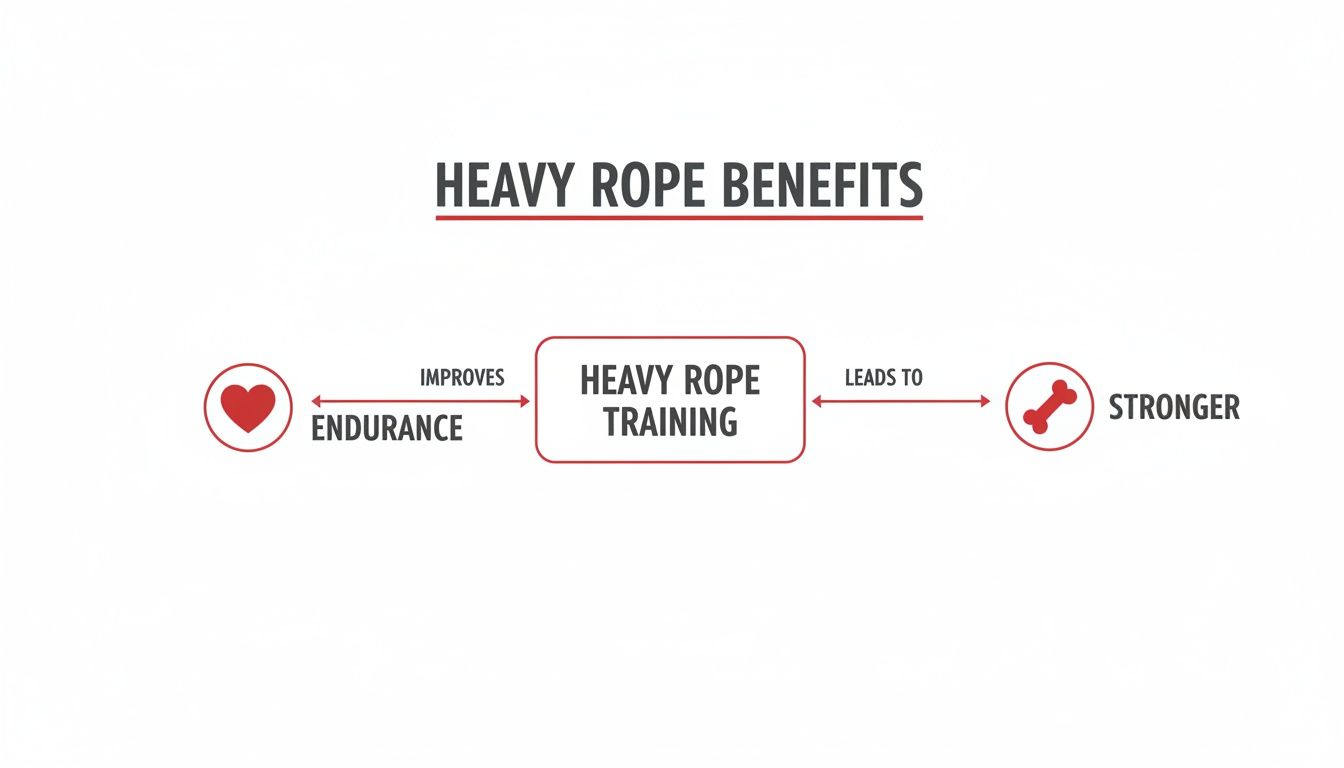
As you can see, heavy rope training delivers a one-two punch: boosting endurance while also building a stronger skeletal frame.
Heavy Ropes vs. MONFIT Battle Ropes
At a glance, heavy jump ropes and battle ropes seem similar. They’re both weighted ropes used for conditioning, right? But in practice, they’re used very differently. Battle ropes are anchored to a fixed point and used for explosive, high-intensity intervals that hammer your upper body and core. If you’re curious, you can check out some great battle rope exercises for beginners to see them in action.
The heavy jump rope’s biggest advantages here are portability and coordination. You aren't tethered to an anchor, so you can train just about anywhere. More importantly, the jumping element brings your lower body into the fight, making it a true full-body, coordinated movement. It teaches your body to move as a single, powerful unit.
The heavy jump rope is the ultimate blend of portability, strength, and cardio. It takes the power of a battle rope and the rhythm of a speed rope and packs it into a tool you can take anywhere.
Let’s lay it all out in a simple table to see these differences side-by-side.
Heavy Jump Rope vs. Other Training Tools
This table compares the heavy jump rope against other popular fitness equipment to help you decide which tool best fits your training goals and lifestyle.
| Equipment | Primary Benefit | Muscle Engagement | Portability | Space Required |
|---|---|---|---|---|
| Heavy Jump Rope | Strength + Cardio | Full Body | Excellent | Small |
| Light Speed Rope | Speed + Cardio | Lower Body Focus | Excellent | Small |
| Kettlebell | Explosive Power | Full Body | Good | Medium |
| Battle Ropes | Power Endurance | Upper Body & Core | Poor | Large |
Ultimately, the right tool always depends on your goals. While every piece of equipment has its place, the heavy jump rope truly stands out for its unique ability to pack a potent mix of strength and conditioning into one portable, affordable, and incredibly effective package.
And while you're focused on the rope, don't forget your foundation. Having the right footwear is critical, so it's worth exploring the best shoes for jump rope performance to make sure you’re safe and supported with every jump.
How to Weave Heavy Ropes Into Your Workouts
Knowing the "why" behind heavy jump rope training is a great start, but the real magic happens when you actually start skipping. The good news? Bringing this incredible tool into your routine doesn't need to be complicated. With a smart approach, you can turn all that theory into a calorie-burning, muscle-building reality.
Think of this as your practical playbook for getting started. We'll walk through everything from picking the right rope to nailing your form, and even give you a few workouts you can try today. The goal here is to get you jumping confidently and making the most of your MONFIT heavy rope from day one.
Choosing Your Starting Weight
The first, most crucial step is picking a rope that challenges you without wrecking your form. A common rookie mistake is going too heavy, too fast. This usually leads to sloppy form and puts you at risk for injury. You're looking for the sweet spot: a weight that gives you enough resistance to fire up your upper body and core, but not so much that you're gassed after a handful of turns.
For most people dipping their toes into weighted ropes, a 1 LB rope is the perfect entry point. It has enough heft to give you that crucial feedback for learning timing and rhythm, but it’s light enough that you can really focus on building a solid foundation.
- Beginners (0-6 months experience): Stick with a 1 LB rope. This is your best friend for mastering the fundamentals of good form and timing.
- Intermediates (6-12 months experience): Once you're feeling comfortable, stepping up to a 1.5 LB or 2 LB rope is a fantastic way to introduce progressive overload and amp up the strength-building challenge.
- Advanced Users (1+ year experience): The heavier ropes (2 LB and up) are absolute beasts for strength-focused finishers and next-level conditioning work.
The right heavy rope slows the rotation just enough for your brain to connect with the movement. This feedback loop is what makes it easier for beginners to find their rhythm compared to a wispy, unpredictable speed rope.
Mastering Your Form and Safety
Before you take your first jump, let's lock in the fundamentals. Proper form isn't just about looking good—it's essential for reaping all the benefits and, more importantly, keeping your workouts safe and injury-free.
Here are the key points to drill into your technique:
- Rotation from the Wrists: Don't be an arm-swinger. All the power should come from small, tight circles with your wrists. Keep those elbows tucked in close to your sides, almost like they're glued there.
- Stay on the Balls of Your Feet: Every landing should be soft and springy, right on the balls of your feet. Your heels should barely, if ever, kiss the ground.
- Low Jumps: You only need to jump an inch or two off the ground—just enough to clear the rope. Bounding high into the air just wastes energy and puts unnecessary stress on your joints.
- Choose the Right Surface: Be kind to your shins and jump on a forgiving surface. A rubber gym floor, a dedicated jump rope mat, or even a wooden floor works great. Steer clear of concrete, and avoid super-soft surfaces like plush carpet that can cause you to roll an ankle.
Keeping these cues in mind will help you build a safe and powerful jumping technique that will serve you for years. For more ideas on setting up your space, take a look at our guide on the best home gym equipment.
Sample Heavy Rope Workouts
Alright, let's put it all together. Here are a couple of sample routines that show just how versatile a heavy rope can be, whether you're chasing fat loss or building power.
Workout 1: The Calorie-Torching HIIT Session
This one is all about maximizing your results in minimum time. The plan is simple: go all-out during the work intervals, then recover just enough to do it again.
- Warm-up: 3 minutes of light jumping and dynamic stretches.
-
Main Set:
- 30 seconds of intense jumping (basic bounce)
- 30 seconds of complete rest
- Repeat for 10-15 rounds.
- Cool-down: 3 minutes of slow jumping and static stretching.
Workout 2: The Strength Finisher
Tack this circuit onto the end of your regular strength training day. It’s a fantastic way to build muscular endurance and send your metabolism through the roof.
-
Perform 5 rounds of the following circuit, resting as little as possible:
- 50 heavy rope jumps
- 10 push-ups
- 10 bodyweight squats
The power-building potential here is no joke. One 12-week study found that athletes who trained with weighted ropes saw huge gains in their explosive power, improving their standing long jump and medicine ball throws. This is real-world proof that heavy ropes build functional strength in your hips, knees, arms, and core, making you a better all-around athlete. You can dive deeper into how weighted ropes boost anaerobic fitness in this study's findings.
Your Questions About Heavy Ropes, Answered
Jumping into the world of heavy ropes can feel like a big leap, but it doesn't have to be confusing. You’ve probably seen the hype—from forging serious strength to building elite-level endurance—but now it's time to get down to the practical details. This section is all about clearing up the common questions and giving you the confidence to get started.
We've pulled together the most frequent questions we hear from people just like you. The goal here is simple: provide clear, straight-up answers so you can stop wondering and start reaping the rewards of this incredible training tool.
What Weight Heavy Jump Rope Should I Start With?
This is, without a doubt, the most important question for anyone new to heavy ropes, and thankfully, the answer is pretty straightforward. For almost everyone starting out, a 1 lb rope is the sweet spot. It hits that perfect balance of being heavy enough to teach you proper form but not so heavy that it completely gasses you out and encourages bad habits.
That 1 lb of weight gives you real, tangible feedback with every rotation. You can actually feel the rope moving, which makes timing your jumps so much easier. This is a huge leg up compared to those wispy-thin speed ropes that can feel chaotic and frustrating when you're just trying to find a rhythm. Once you've nailed your form and built up some strength, you can then move on to a 1.5 lb or 2 lb rope.
Think of it like this: learning with a rope that’s too light is like trying to learn guitar on a string that’s too loose—there’s no feedback. The weight of a 1 lb rope provides the perfect tension to help you find your rhythm and build a solid foundation.
This is exactly why MONFIT offers a range of weights. We want to be there with you as you progress, allowing you to scale up the challenge when your fitness improves and your goals get bigger.
Can I Use a Heavy Jump Rope for HIIT Workouts?
Absolutely. In fact, heavy ropes are a phenomenal tool for High-Intensity Interval Training (HIIT). You could even argue they're one of the most effective pieces of equipment out there for this style of training, simply because of the insane metabolic demand they create from the first swing.
The added resistance forces your heart rate to skyrocket during your "on" intervals, making every second of work incredibly productive for torching calories and boosting your anaerobic fitness. You’re also firing up way more muscles—your shoulders, back, core, and arms all have to work overtime—meaning your body expends far more energy than it would with a light rope.
A classic, brutally effective HIIT protocol to try is:
- 30 seconds of intense, all-out jumping.
- 30-60 seconds of complete rest.
- Repeat this cycle for 10-15 rounds.
This simple workout gives you the best of both worlds—powerful cardio and demanding muscular endurance—all in one highly efficient session that gets the job done fast.
How Is Jumping With a Heavy Rope Different From a Light Rope?
The experience of jumping a heavy rope versus a light one is night and day. They're fundamentally different tools designed for different fitness goals. It isn't just about adding weight; it changes the entire dynamic of the exercise.
Light ropes, or speed ropes, are all about agility, quick footwork, and pure cardiovascular output. They're the go-to for skills like double-unders, where the whole point is to move as fast as humanly possible.
Heavy ropes, on the other hand, are built for power, strength, and muscular endurance. The pace is naturally slower, more deliberate. Every single rotation is a conscious effort, demanding serious engagement from your shoulders, back, arms, and core just to control the rope's momentum.
| Feature | Light Speed Rope | Heavy Jump Rope |
|---|---|---|
| Primary Goal | Speed & Agility | Power & Strength |
| Pace | Fast & Erratic | Slow & Deliberate |
| Muscle Focus | Lower Body & Cardio | Full Body (Upper, Core, Lower) |
| Feedback | Minimal | High |
| Best For | Double-Unders, Quick Feet | HIIT, Strength Conditioning |
While both are great for your heart, a heavy rope brings a major strength-training element to the table that a light rope just can't touch.
What Is the Best Surface for Jumping With a Heavy Rope?
Picking the right surface isn't a minor detail—it's critical for protecting your joints and getting the most from your training. The ideal surface has just enough give to absorb impact but is firm enough to let you bounce right back up. Jumping on the wrong surface is a fast track to issues like shin splints or achy knees.
Rule number one: avoid hard, unforgiving surfaces like concrete or asphalt at all costs. The repetitive shock on these materials sends a jarring force right up your legs and can lead to injury over time. On the flip side, you also want to avoid surfaces that are too soft, like thick carpet or grass. They can eat up your energy, make your jumps feel sluggish, and even increase the risk of rolling an ankle.
Here are your best bets for a jumping surface:
- A dedicated jump rope mat: This is the gold standard, designed specifically for this.
- Rubber gym flooring: This is a fantastic option, offering that perfect blend of firmness and shock absorption.
- A firm piece of plywood: If you're stuck on carpet, laying down a piece of plywood can create a great makeshift station.
- Hardwood floors: These can work, but a mat is still a good idea to protect both the floor and your joints.
Investing in a proper surface is just as important as getting a quality rope. It’s what makes your training safe, effective, and something you can stick with for the long haul.
Ready to feel the powerful, full-body benefits for yourself? The MONFIT heavy jump rope is engineered for durability and performance, helping you build real strength and endurance from anywhere. Explore our collection and find the perfect rope to start your journey today.
